
Za'atar substitute: the best options for home cooks

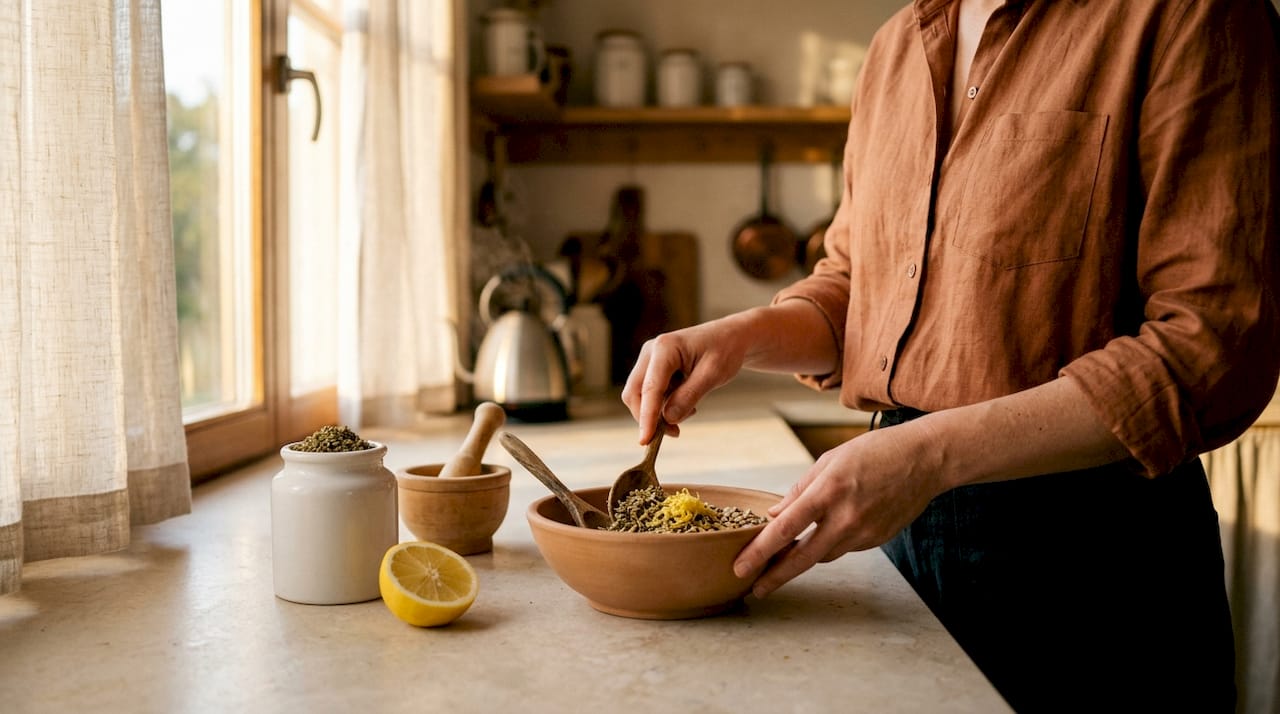
A za’atar substitute is a carefully balanced blend of dried herbs, toasted sesame seeds, and an acidic component such as sumac or lemon zest, designed to replicate the herbal, nutty, and tangy character of authentic za’atar. The original blend centres on Origanum syriacum, a wild herb native to the Levant, which gives za’atar its distinctive floral and woodsy depth. When that herb or the full spice mix is unavailable, a well-constructed alternative can deliver nearly identical results in dips, flatbreads, roasted vegetables, and marinades. The key is understanding which flavour layer each ingredient provides, so you can swap intelligently rather than guessing.
What are the standard ingredients and ratios for a za’atar substitute?
The most accurate DIY za’atar substitute uses a 1:1:1 ratio of dried thyme, toasted sesame seeds, and sumac by volume. That combination replicates the three core flavour layers: herbal earthiness, nutty richness, and sharp acidity. Each layer is non-negotiable if you want the result to taste recognisably like za’atar rather than a generic herb mix.
Here is what each component contributes:
Dried thyme provides the backbone. It delivers the earthy, slightly medicinal quality that defines za’atar’s herbal character.
Toasted sesame seeds add texture and a warm, nutty depth. Raw sesame seeds taste flat by comparison.
Sumac supplies the tartness. Its burgundy colour and fruity acidity are what separate za’atar from Italian herb blends.
Salt is optional but common. A small pinch sharpens all the other flavours.
When sumac is unavailable, lemon zest substitutes effectively at one teaspoon per tablespoon of base herbs. The acidity is similar, though lemon zest lacks sumac’s fruity depth. For a closer match, combine lemon zest with a small pinch of citric acid, which you can find in most baking aisles.
Pro Tip: Measure by volume, not weight. The density of sesame seeds versus dried thyme differs significantly, and weight measurements will throw the flavour balance off.
Which herb substitutions work best when thyme or sumac are unavailable?
Authentic za’atar contains Origanum syriacum, a wild herb whose flavour sits between thyme, oregano, and marjoram. No single supermarket herb replicates it exactly. Blending two or three herbs together gets much closer than using any one alone.
The best herb combinations for replacing thyme in a za’atar blend are:
Oregano alone: earthier and more pungent than thyme. Works well in cooked dishes but can overpower delicate dips.
Marjoram alone: sweeter and milder. Better for raw applications like labneh toppings or salad dressings.
Oregano and marjoram combined (equal parts): the closest approximation to Origanum syriacum’s complex, floral notes. This is the recommended approach.
For sumac alternatives, the options each carry trade-offs:
Dried lemon zest: bright and citrusy, maintains a dry texture, and works in both raw and cooked applications.
Citric acid: more neutral in flavour but delivers clean acidity without any citrus aroma. Use sparingly.
Vinegar: adds acidity but also moisture, which shortens shelf life and causes clumping. Avoid in dry blends.
Fresh lemon juice ruins dry blends by introducing moisture that leads to spoilage and clumping within days. Always use dried zest or citric acid when making a blend you intend to store.
Pro Tip: If you can only find one herb, choose marjoram over oregano for raw dishes and oregano over marjoram for anything going into the oven. The heat mellows oregano’s sharpness considerably.
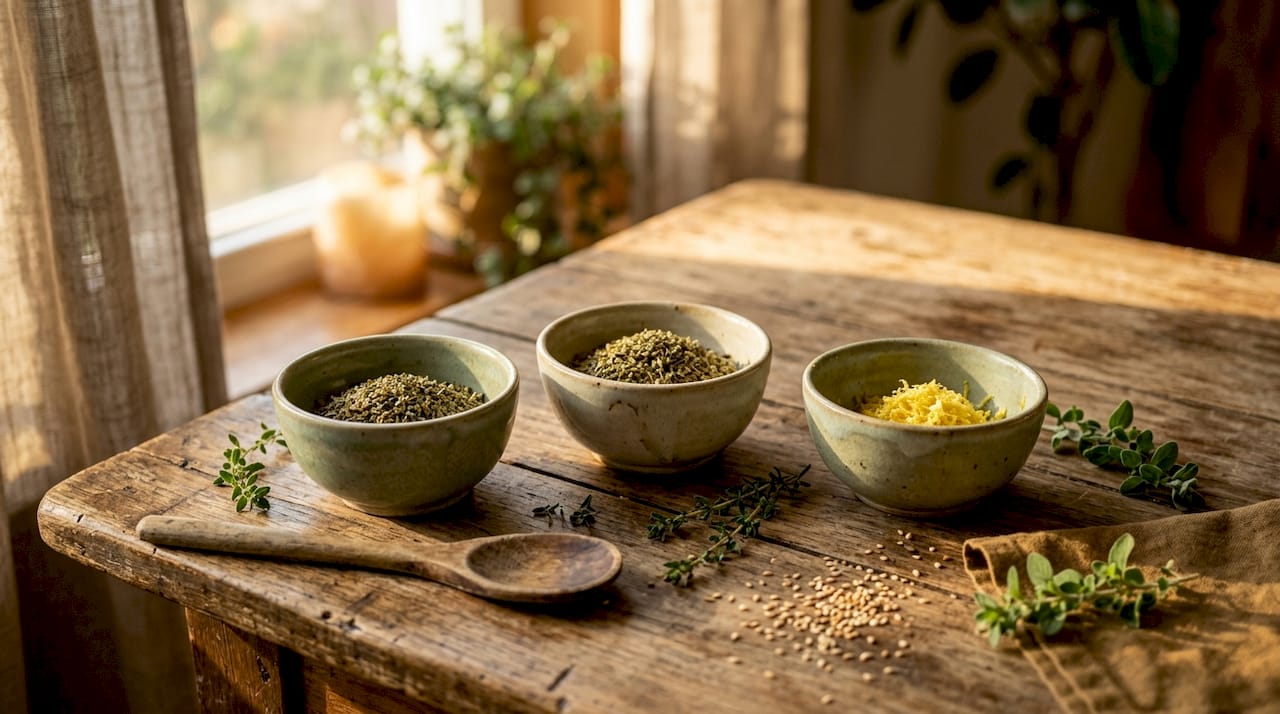
High-quality sumac is harder to replace than most cooks expect. Vibrant burgundy sumac delivers a fruity tartness that lemon zest alone cannot fully match. If you cook Middle Eastern food regularly, keeping a supply of good sumac spice on hand is worth the effort.
How to prepare and store homemade za’atar substitutes
Preparation technique matters as much as the ingredient list. A poorly prepared blend loses its vibrancy within weeks, even if the recipe is correct.
Toast the sesame seeds first. Place them in a dry pan over medium heat and stir constantly for two to three minutes until golden. Remove from the heat immediately.
Cool completely before mixing. Toasting and cooling sesame seeds before blending prevents premature essential oil release, which would cause the nuttiness to fade quickly.
Use only dried ingredients. Fresh lemon zest must be dried before use. Spread it on a plate and leave it at room temperature for several hours, or dry it briefly in a low oven.
Mix in a bowl, not a blender. A blender grinds the sesame seeds into a paste. The whole seeds are part of za’atar’s texture.
Store in an airtight glass jar. Keep the jar away from heat and direct light. A cupboard away from the hob is ideal.
Homemade blends stored correctly maintain their flavour for approximately three months. After that, the volatile oils in the herbs dissipate and the blend tastes flat. Label the jar with the date so you know when to make a fresh batch.
The most common pitfall is using stale dried herbs. If your thyme or oregano has been sitting in the cupboard for over a year, it will contribute almost no flavour. Smell the herbs before mixing. If they smell faint, replace them.
Pro Tip: Add freshly crushed cumin seeds to your blend for extra warmth and complexity. Crushed cumin seeds outperform pre-ground cumin powder significantly in both aroma and depth.
What are the best za’atar substitute blends for different dishes?
Not every substitute works equally well across all recipes. The dish type, cooking method, and the role za’atar plays in the recipe all affect which blend to choose.
Blend | Key ingredients | Best used for |
Thyme, sumac, sesame | Dried thyme, toasted sesame, sumac | Flatbreads, labneh, olive oil dips |
Oregano, sesame, lemon zest | Dried oregano, sesame, dried lemon zest | Roasted vegetables, marinades, vinaigrettes |
Marjoram, sesame, citric acid | Dried marjoram, sesame, pinch of citric acid | Salad dressings, fresh cheese toppings |
Italian seasoning, sesame, lemon zest | Mixed Italian herbs, sesame, lemon zest | Quick pantry substitute for cooked dishes |
Dukkah-style blend | Hazelnuts, coriander, sesame, cumin | Bread dipping, roasted meats |
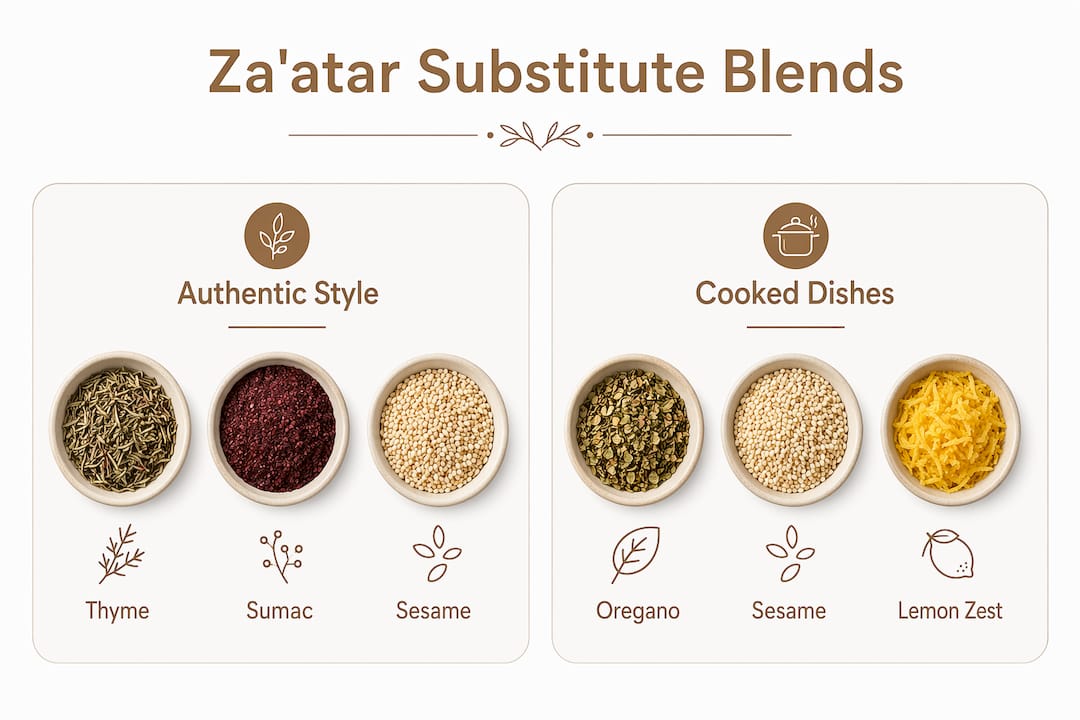
The thyme, sumac, and sesame blend is the closest match to authentic za’atar and works best where the spice is the star of the dish. For flatbreads mixed with olive oil, or sprinkled over labneh, this blend is the right choice.
The oregano, sesame, and lemon zest combination suits cooked applications better. Oregano holds up to heat more reliably than thyme, making it the practical option for roasted chicken, grilled aubergine, or a warm vinaigrette.
A simple thyme and toasted sesame mix works well in everyday cooking where za’atar is one flavour among many rather than the centrepiece. Dips, roasted vegetables, and casual dishes do not require a perfectly calibrated blend. That is reassuring for cooks who want results without complexity.
Dukkah is worth mentioning as a distinct alternative. It shares sesame seeds and cumin with za’atar but leans nuttier and less herbal. Use it when you want a similar textural experience with a different flavour direction. It pairs particularly well with bread and good olive oil.
When za’atar is the background flavour in a dish, such as in a spice-rubbed lamb or a mixed grain salad, the Italian seasoning blend with sesame and lemon zest is a perfectly acceptable shortcut. The flavour will not be identical, but the dish will still work. For a deeper understanding of the wild za’atar herb itself, including its botanical character and culinary uses, the distinction between Origanum syriacum and common thyme becomes clearer.
If you need to replace sumac specifically rather than the whole blend, the sumac substitute guide covers the acidity options in more detail.
Key takeaways
The most reliable za’atar substitute combines dried thyme, toasted sesame seeds, and sumac or dried lemon zest in equal parts, stored in an airtight jar for up to three months.
Point | Details |
Use a 1:1:1 ratio | Equal parts dried thyme, toasted sesame seeds, and sumac form the foundation of any accurate substitute. |
Toast sesame seeds first | Toasting and cooling before mixing preserves essential oils and prevents the nuttiness from fading. |
Avoid fresh lemon juice | Fresh juice introduces moisture that causes clumping and spoilage; use dried lemon zest or citric acid instead. |
Blend herbs for complexity | Combining oregano and marjoram in equal parts better approximates the wild Origanum syriacum than either herb alone. |
Store correctly for three months | Airtight glass jars kept away from heat and light maintain flavour for approximately three months. |
Why I stopped chasing the perfect substitute
The honest truth about za’atar substitutes is that perfection is the wrong goal. I spent a long time trying to find the single blend that tasted exactly like the za’atar I first encountered in a Palestinian kitchen, and I was consistently disappointed. The wild Origanum syriacum that grows in the hills of the Levant has a flavour that no combination of supermarket thyme and oregano will fully replicate. Accepting that changed how I cook with substitutes entirely.
What actually matters is freshness. A blend made with herbs bought last week will outperform a technically correct recipe using year-old dried thyme every single time. I now treat the spice drawer as a perishable zone and replace dried herbs far more often than I used to.
The other shift was learning to match the substitute to the dish rather than treating one blend as universal. Oregano with sesame and lemon zest in a roasted vegetable tray tastes genuinely good. The same blend on raw labneh tastes slightly off. Knowing which blend suits which application is more useful than finding one perfect formula.
Experimentation is the real skill here. Start with the 1:1:1 base, taste it, and adjust. Add more sesame if you want nuttiness. Add more lemon zest if the acidity feels flat. The blend is yours to calibrate.
— abdelmuhsen
Authentic Palestinian botanicals from Palinova
Za’atar’s depth comes from the land it grows in. Palinova sources botanicals directly from Palestinian terrain, including pure Origanum Syriacum essential oil, distilled from the wild za’atar herb itself. For cooks and food enthusiasts who want to understand the plant behind the blend, this oil captures the herb’s true aromatic character in concentrated form.
Palinova also offers wildcrafted essential oils drawn from the same agricultural heritage that shapes Middle Eastern cooking. From the earthy warmth of Aleppo Pine essential oil to cold-pressed seed oils rooted in Palestinian tradition, each product reflects the same commitment to quality and authenticity that makes za’atar worth seeking out in the first place. Free aromatherapy consultations are available for those wanting personalised guidance.
FAQ
What is the simplest za’atar substitute?
The simplest substitute is equal parts dried thyme and toasted sesame seeds. This two-ingredient blend works well in everyday dishes where za’atar is a background flavour rather than the star.
Can I make za’atar without sumac?
Yes. Replace sumac with dried lemon zest at one teaspoon per tablespoon of base herbs. Citric acid also works and delivers clean acidity without altering the blend’s texture or colour.
How long does a homemade za’atar substitute last?
A correctly stored homemade blend lasts approximately three months. Keep it in an airtight glass jar away from heat and direct light, and label it with the date you made it.
Is oregano a good substitute for thyme in za’atar?
Oregano works but tastes earthier and more pungent than thyme. Blending equal parts oregano and marjoram produces a more accurate approximation of the wild Origanum syriacum that authentic za’atar uses.
Why does my homemade za’atar substitute taste flat?
Flat flavour almost always comes from stale dried herbs. Smell your thyme or oregano before mixing. If the aroma is faint, the herbs have lost their volatile oils and need replacing before the blend will taste vibrant.
Recommended

Comments